“Can Olympic Athletes Use Cannabis? Officially No, But…”
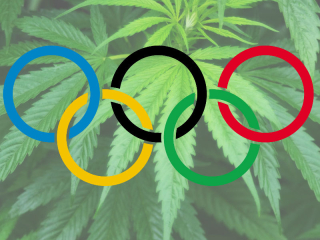
Whether or not you consider cannabis a performance-enhancing substance, it’s still a no-no for Olympic athletes. Being caught can mean suspension or even the loss of a medal. Just ask Canada’s Ross Rebagliati, who in 1998 was stripped of the first-ever Olympic gold for snowboarding after his urine tested positive for THC.
Rebagliati eventually got his medal back after pointing out that cannabis at the time wasn’t actually classified as a banned substance. But every year since, cannabinoids have appeared on the official “Prohibited List” put out annually by the World Anti-Doping Agency (WADA). Sorry, brah.
That’s not to say WADA is especially strict when it comes to cannabis. In fact, the agency’s limits are probably more lenient than your employer’s.
In 2016, we called the Olympic limits on cannabinoids “shockingly reasonable”—and they’ve only gotten more sensible since. Athletes’ urine must contain less than 150 nanograms per milliliter of carboxy-THC, a cannabis metabolite.
By comparison, workplace drug tests commonly used by private employers in the United States set thresholds between about 15 ng/mL and 100 ng/mL. (Rebagliati, the snowboarder, returned a result of 17.8 ng/mL.) Legal-cannabis states often have per se limits for cannabis DUIs, but those are generally based on concentrations of active THC in whole blood rather than WADA’s test for metabolites in urine, making the limits difficult to compare directly.
WADA’s THC limit used to be just 15 ng/mL, but the agency quietly raised it in 2013. The head of the International Olympic Committee’s medical commission said at the time that the change was “a reasonable attempt at dealing with a complicated matter,” adding: “There is a big debate on it.”
How does the limit translate in terms of actual cannabis consumption? That’s hard to say for certain. How long cannabis remains in a person’s system depends consumption habits, genetics, as well as lifestyle factors such as diet and exercise. Athletes, who are generally leaner and more active than average, would likely be able to pass a test sooner than those of us watching from the couch at home….
At the end of the day, Olympic athletes are allowed a fair amount of leeway when it comes to cannabis test results, but they still operate in a world with scant protection for medical use. As more countries move to legalize, perhaps that will change.