AG-nominee Bill Barr reiterates (with nuance) commitment to non-enforcement of federal marijuana prohibition in reform states
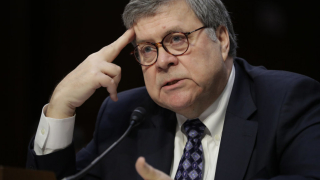
William Barr, President Trump’s nominee to serve as the next U.S. attorney general, made headlines earlier this month when he pledged during his Senate confirmation hearing not to “go after” marijuana companies that comply with state laws.
Now, in response to written questions from senators, Barr is putting that pledge on paper, in black and white. He’s also calling for the approval of more legal growers of marijuana for research, and is acknowledging that a recent bill legalizing hemp has broad implications for sale of cannabis products.
“As discussed at my hearing, I do not intend to go after parties who have complied with state law in reliance on the Cole Memorandum,” he wrote, referring to Obama-era cannabis enforcement guidance that then-Attorney General Jeff Sessions rescinded last year.
That said, Barr isn’t committing to formally replacing the Cole Memo, which generally directed federal prosecutors not to interfere with state marijuana laws, with new guidance reiterating the approach. “I have not closely considered or determined whether further administrative guidance would be appropriate following the Cole Memorandum and the January 2018 memorandum from Attorney General Sessions, or what such guidance might look like,” he wrote in response to a question from Sen. Cory Booker (D-NJ). “If confirmed, I will give the matter careful consideration.”
And Barr, who previously served as attorney general under President George H. W. Bush, says it would be even better if Congress got around to addressing the growing gap between state and federal marijuana laws. “I still believe that the legislative process, rather than administrative guidance, is ultimately the right way to resolve whether and how to legalize marijuana,” he wrote in a compilation of responses delivered to the Senate Judiciary Committee on Sunday.
But even as Barr reiterated that he wouldn’t go after people and businesses that benefited from the Cole memo, he voiced criticism of policy directives like it and of the idea of legalization in general. “An approach based solely on executive discretion fails to provide the certainty and predictability that regulated parties deserve and threatens to undermine the rule of law,” Barr wrote in response to a question from Sen. Dianne Feinstein (D-CA). “If confirmed, I can commit to working with the Committee and the rest of Congress on these issues, including any specific legislative proposals. As I have said, however, I do not support the wholesale legalization of marijuana.”
Nonetheless, legalization advocates were happy to see the nominee reiterating his non-enforcement pledge when it comes to state-legal businesses. “It’s positive to see Barr make the same commitments on marijuana enforcement in writing as he did in the hearings,” Michael Collins, director of national affairs for the Drug Policy Alliance, said. “My hope is that he sends this message to all federal prosecutors so that states are given space to reform their outdated, broken, racist marijuana laws, and the country can turn the page on prohibition.”