Noting a dozen states that may be voting on marijuana and other drug reforms in 2020
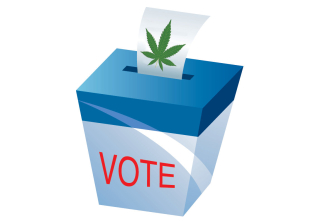
Marijuana reform has advanced in numerous state legislatures in the first half of 2021, with lawmakers enacting four new legalization laws so far this year. Now, activists in roughly a dozen states are moving to put cannabis legalization proposals directly before voters in 2022.
Across the country, advocates are in the early stages of drafting proposals, collecting signatures and engaging in public outreach to build support for medical and recreational cannabis legalization measures that they hope to see voted on next year. In at least one state, activists are working to qualify a measure to legalize psychedelic mushrooms for next November’s ballot. And in others, lawmakers may take it upon themselves to put cannabis referendums up for the general election without the need for citizen petitions….
Here’s a breakdown of where cannabis legalization and other drug policy reforms could be decided by voters in 2022, as well as a look at a handful of local efforts to enact marijuana policy changes via municipal ballot initiatives this year.
Arkansas
Arkansas activists are collecting signatures to place adult-use marijuana legalization on the state’s 2022 ballot….
California
California psychedelics activists recently filed a petition for the 2022 ballot to make the state the first in the nation to legalize psilocybin mushrooms for any use….
Idaho
Advocates in Idaho are working to advance separate measures to legalize possession of recreational marijuana and to create a system of legal medical cannabis sales….
Maryland
Maryland’s House speaker recently pledged that lawmakers will pass legislation to put the question of marijuana legalization before voters as a referendum on the 2022 ballot….
Mississippi
No initiatives have been filed for the 2022 ballot so far, but advocates say it’s possible a campaign could launch if the legislature fails to enact medical cannabis legalization during a special session this year or ends up passing a bill that has less robust patient protections than they want….
Missouri
A group of Missouri marijuana activists recently a number of separate initiatives to put marijuana reform on the state’s 2022 ballot, a move that comes as other advocacy groups are preparing separate efforts to collect signatures for cannabis ballot petitions of their own….
Nebraska
Nebraska marijuana activists are gearing up for a “mass scale” campaign to put medical cannabis legalization on the state’s 2022 ballot after the legislature failed to pass a bill to enact the reform this session….
North Dakota
After a House-passed bill to legalize marijuana in North Dakota was rejected by the Senate in March, some senators hatched a plan to advance the issue by referring it to voters on the 2022 ballot….
Ohio
Ohio marijuana activists recently unveiled a new plan to legalize cannabis in the state via the ballot as lawmakers pursue separate reform legislation….
Oklahoma
Oklahoma advocates are pushing two separate initiatives to legalize marijuana for adult use and overhaul the state’s existing medical cannabis program….
South Dakota
South Dakota activists recently filed four separate legalization measures with the state Legislative Research Council — the first step toward putting the issue before voters next year if the state Supreme Court upholds a lower court ruling that overturned the legal cannabis measure that voters approved last November….
Wyoming
Activists are seeking to put separate measures to legalize medical cannabis and decriminalize adult-use marijuana before voters next year — and the secretary of state’s office recently approved the latest version of their proposed ballot language, freeing up advocates to gather a requisite 100 signatures per initiative in order to proceed to the next step.