Student presentation examines marijuana reform’s impact on drug trafficking over southern border
The echoes and impacts of marijuana reform are always notable (and unpredictable), and one of my students in my Marijuana Law, Policy & Reform seminar is exploring marijuana reform’s impact on broader drug trafficking over southern border. The fifth scheduled presentation in my class is described this way (along with background readings):
Marijuana, historically, was a highly-trafficked drug into the United States from both the Canadian and Mexican borders. In the wake of legalization, both for medicinal and recreational uses, the desire for imported marijuana has declined, and other drugs have become more desirable for trafficking. Marijuana legalization has contributed to Mexico’s adaptation to alternative drug trafficking routes along the U.S.-Mexico border, and new markets have grown significantly. With California, Arizona, and New Mexico having legalized marijuana, the need for trafficked marijuana has placed a burden on the southern border in Texas. Legalization in these states not only contributed to this migratory shift and increased seizures in Texas, but also further deepened the dent in the profits of organized crime groups in Mexico.
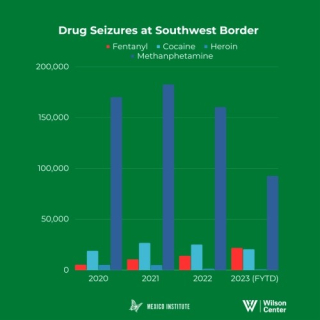
The shift seen in marijuana trafficking has not halted the illegal transport of drugs. As popularity in illicit substances such as fentanyl and methamphetamine grow, southern border states are experiencing heightened volumes of the trafficking of such synthetic drugs. The trafficking of illicit substances impacts many parts in a supply chain, from finished product to money, both in financing illicit organizations, and for the cost of protecting the southern border and the American public from illicit drugs.
Background materials:
InSight Crime, With Legalization, Marijuana Trafficking Routes Evolve Along US-Mexico Border (Dec. 13, 2022).
U.S. Customs and Border Protection, CBP: America’s Front Line Against Fentanyl (March 6, 2024).