Noting political pendulums swinging back on modern marijuana reforms … to tax and regulate more
As every state surrounding Idaho legalized marijuana, state Rep. Bruce Skaug started to view it as inevitable that the Gem State would follow suit. Not anymore…. He believes other states are starting to regret liberalizing marijuana use, because of potential health concerns and lackluster revenues from marijuana sales….
Idaho’s not alone. After years of expanding legal access, lawmakers in several states this year have targeted marijuana in various ways. To help close budget gaps, officials in Maryland, Michigan and New Jersey have proposed raising marijuana taxes. Health concerns have pushed lawmakers in states including Colorado and Montana to attempt to cap the level of tetrahydrocannabinol, or THC, the primary psychoactive component in cannabis, in marijuana products sold at dispensaries. And some lawmakers have even tried to roll back voter-approved medical marijuana programs….
Polling from the Pew Research Center has found little change in support for legalization in recent years: 57% of U.S. adults say that marijuana should be legal for medical and recreational purposes. Colorado and Washington state began allowing recreational marijuana sales in 2014. Today, 24 states and the District of Columbia allow recreational sales, and 39 states and the district have sanctioned medical marijuana.
In several states, lawmakers have aimed to restrict the potency of marijuana products. Montana state Sen. Greg Hertz, a Republican, said he doesn’t want to end recreational marijuana sales, which voters approved in 2020. But he said today’s products are much stronger than people may realize. “People were voting for Woodstock weed, not this new high-THC marijuana,” he said.
A bill he sponsored this year would have banned sales of recreational marijuana products, including flower and edibles, exceeding THC levels of 15%. Montana currently allows up to 35% THC in flower, with no limit on other products. That legislation stalled, but Hertz said he plans to pitch a similar measure during Montana’s next legislative session in 2027.
A separate bill reducing the state’s dosage of THC for edibles just passed the legislature last week. The measure, which now heads to Republican Gov. Greg Gianforte, would change the individual dosage limit on edibles such as gummies from 10 milligrams to 5 milligrams….
With many states facing gaping budget holes this year, marijuana has proven a popular target from Democrats and Republicans looking to raise revenues without across-the-board tax increases.
Maryland Democratic Gov. Wes Moore in January proposed hiking the cannabis tax from 9% to 15% to help close the state’s $3 billion budget hole. In March, lawmakers agreed to a budget framework that would raise the state marijuana tax to 12%. Ohio Republican Gov. Mike DeWine proposed doubling marijuana taxes from 10% to 20% — a notion that has so far faced opposition in the legislature.
In Michigan, Democratic Gov. Gretchen Whitmer proposed a new 32% wholesale tax on marijuana growers to help fund road improvements. That tax would be on top of the 10% excise tax on recreational marijuana and the state’s 6% sales tax. Whitmer said it would close a loophole that has exempted the marijuana industry from wholesale tax, which is applied to cigarettes and other tobacco products. Michigan lawmakers, split sharply along partisan lines, have until Sept. 30 to approve a state budget.
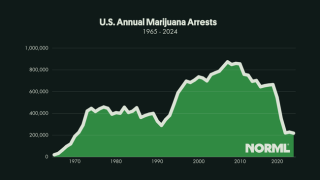
Especially as one who has long been particularly troubled by the (inequitable) crminalization of cannabis and the (inequitable) consequences of criminalization, I see these recent developments as a (healthy) outgrowth of state-by-state reforms and laboratories of democracy in the US. Notably, according to FBI data, we have seen a precipitous decline in arrests for marijuana activity over the last decade, but we do not see voters or their representatives urging the return of widespread criminalization and mass enforcement. But public health concerns and tax/business issues are now the focal point for discussions and debates over potential revisions to existing state marijuana regimes. And rightly so, as there are plenty of public health and tax/business issues that we are still coming to undestand better as modern marijuana regimes continue to develop.