Biden Administration moves federal marijuana rescheduling forward to start public comment period
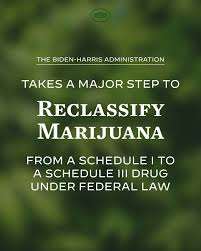
The Justice Department, after receiving the go-ahead from the White House, published an official notice, opening a two-month period for the public to comment on the proposed change. The rule reclassifying marijuana as a Schedule III controlled substance would not go into effect until afterward.
Marijuana would not be legalized federally, but would move out of the Schedule I category reserved for tightly controlled substances such as heroin and LSD. If the rule goes into effect, marijuana will join a category including prescription drugs such as ketamine, anabolic steroids and testosterone….
The move comes a little more than two weeks after Attorney General Merrick Garland recommended to the White House that marijuana be reclassified as a Schedule III substance. The recommendation was applauded by cannabis supporters who for decades have complained that the federal government exaggerated the dangers of the drug.
Marijuana’s Schedule I status means it is tightly controlled because the federal government sees no proven medical value and a high potential for abuse. Stripping that designation would provide researchers easier access to cannabis and allow marijuana companies to deduct business expenses from their tax bills — a boon for an industry that has struggled because of high operating costs and competition from the illicit market. “Our ultimate goal is federal legalization, and we see Schedule III as a necessary and critical step along the way,” Edward Conklin, executive director of industry group U.S. Cannabis Council, said in a statement….
Some cannabis advocates say reclassification is an incremental step that doesn’t address the fundamental disconnect between the federal criminalization of the drug and the reality that a majority of Americans live in states where they can legally buy it. The implications of rescheduling for existing legal state markets are especially murky because marijuana has not been treated as a federally regulated medicinal product sold at pharmacies.
Meanwhile, cannabis critics fault the Biden administration for normalizing a drug that can still be harmful to individual and public health. Reclassification of marijuana — which is opposed by some former federal law enforcement officials, some Republicans in Congress and the anti-cannabis group Smart Approaches to Marijuana — could be delayed again by legal and regulatory challenges.
In announcing this move, the Justice Department released its formal federal register rule which will start a 60-day comment period, as well as this 36-page document from the Office of Legal Counsel detailing legal arguments surrounding rescheduling issues.