Student presentation on marijuana reform’s impact on Fourth Amendment doctrines
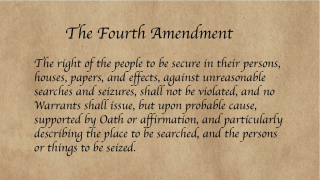
The Fourth Amendment protects against “unreasonable searches and seizures.” U.S. Const. amend IV. Warrantless police searches are therefore “per se unreasonable.” Katz v. United States, 389 U.S. 347, 357 (1967). But that per se rule is not without its exceptions. Police can, for example, search a person’s car without a warrant if they have probable cause to do so. They can also stop and (sometimes) frisk a person based on a reasonable suspicion “that criminal activity may be afoot.” Terry v. Ohio, 392 U.S. 1, 30 (1968). Seeing or smelling marijuana might provide police with just the level of suspicion they need to conduct a search without first obtaining a warrant. But what if marijuana is no longer an automatic indicator of criminal activity?
Courts and legislatures in states like California, Colorado, and Oregon have had to grapple with just that question. The legalization of marijuana has unsettled Fourth Amendment law in those and other jurisdictions. It is not immediately clear anymore what exactly police can do when they encounter marijuana. In many instances, the answer may be nothing at all. This presentation will outline Fourth Amendment law as it relates to marijuana. It will then sketch how the law has evolved in states where marijuana is now perfectly legal. Finally, it will cover possible approaches a state can take to modify search and seizure law following full legalization — including (1) do nothing, (2) leave the issue for courts to resolve, or (3) pursue change through legislation.
Additional Reading:
-
Lauren Williams & Samuel D. Hodge Jr., The Implications of Legalized Marijuana on Establishing Probable Cause for a Warrantless Search, 66 St. Louis U. L.J. (2022).
-
Claire J. Rice, Failing the Sniff Test: Using Marijuana Odor to Establish Probable Cause in Illinois Post-Legalization, U. Chi. L. Rev. Online (Sept. 23, 2022),
-
Kyle Jaeger, Police Can’t Search You for Smelling Like Marijuana Under New Virginia Law, Marijuana Moment (Nov. 10, 2020).
-
People v. McKnight, 446 P.3d 397 (Colo. 2019).