Student presentation exploring how Republicans might tackle marijuana reform from a conservative direction
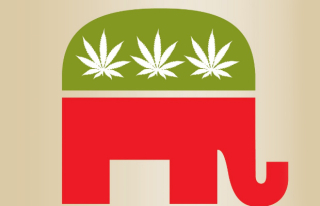
It is no secret that marijuana reform efforts — both medicinally and recreationally — tend to start in blue states with red states lagging behind. Every blue state and almost every purple state has established some sort of medical marijuana program, while around half of red states still have not addressed medical marijuana . Almost every blue state has legalized recreational marijuana, while most red states have not done so. And importantly, marijuana remains illegal at the federal level with Republican members of Congress being the most resistant to a change in policy.
So, are Republicans bound to oppose marijuana reform efforts with no argument in favor? Not necessarily! Several Republican priorities overlap with the priorities of those in the marijuana reform crowd. For example, Republicans tend to oppose an increase in federal power, while marijuana reform advocates support a reduction in federal power over marijuana. Similarly, Republicans support gun rights, while marijuana reform advocates support allowing marijuana users to exercise their Second Amendment rights. Given these overlaps in policy, Republicans have an opportunity to tackle the marijuana issue from a conservative direction — maybe even winning over some support from the marijuana reform crowd. And in doing so, Republicans can ensure the legislative process tempers the excesses of many marijuana reform proposals.
Background Readings:
Kyle Jaeger, “Majority Of Kentucky Residents Back Legalizing Marijuana For Any Purpose, Poll Finds As Medical Hearing Approaches,” Marijuana Moment (Feb. 2020).
Ted Van Green, “Americans overwhelmingly say marijuana should be legal for medical or recreational use,” Pew Research Center (Nov. 2022).
Rebecca Rivas, “Marijuana vote divided Missouri social-justice leaders. Can an equity officer be a bridge?,” Missouri Independent (Nov. 2022).
Maeve Walsh & Natalie Fahmy, “How marijuana could become legal in Ohio in 2023,” NBC4i (Jan. 2023).
United States v Harrison, No. CR-22-00328-PRW (W.D. Okla. Feb. 3, 2023).
Jeffrey Miron, “The Budgetary Effects of Ending Drug Prohibition,” CATO Institute (July 2018).