“Could Bernie Sanders Actually Legalize Marijuana Nationwide On Day One As President?”
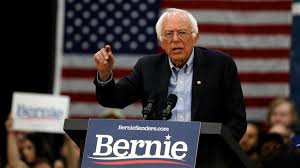
Sen. Bernie Sanders (I-VT) is making a bold promise: if elected president, he will legalize marijuana in all 50 states on his first day in office. “We will end the destructive war on drugs,” the 2020 Democratic candidate said at rally days before this week’s Iowa caucus. “On my first day in office through executive order we will legalize marijuana in every state in this country.”
But while the pledge has been largely welcomed by reform advocates and cannabis enthusiasts, some experts question whether such immediate, sweeping action is legally or practically achievable.
The use of executive orders at the start of a presidency isn’t unprecedented — President Obama signed one aimed at shutting down the controversial Guantanamo Bay prison the day after he assumed office and President Trump issued an order scaling back Obamacare, for example — but there are unique challenges associated with a presidential move to unilaterally remove cannabis from the Controlled Substances Act (CSA).
To effectively end marijuana prohibition through the executive branch, according to an analysis from the Brookings Institution’s John Hudak, the secretary of the Department of Health and Human Services (HHS) or an outside party would have to file a petition, which would then be reviewed by the attorney general, who has usually delegated that responsibility to the Drug Enforcement Administration (DEA). The attorney general can also initiate the process on their own, requesting a scientific review directly to HHS. Under HHS, the Food and Drug Administration (FDA) would then assess the scientific, medical and public health implications before submitting that review to the Justice Department.
“The recommendations of the Secretary to the Attorney General shall be binding on the Attorney General as to such scientific and medical matters, and if the Secretary recommends that a drug or other substance not be controlled, the Attorney General shall not control the drug or other substance,” the CSA states. “If the Attorney General determines that these facts and all other relevant data constitute substantial evidence of potential for abuse such as to warrant control or substantial evidence that the drug or other substance should be removed entirely from the schedules, he shall initiate proceedings for control or removal.”
Thus, changing marijuana’s classification under federal law without an act of Congress is far more complicated than a single stroke of a presidential pen. While Sanders could theoretically make supporting descheduling a condition of nominating candidates to be HHS secretary or attorney general, it’s virtually certain he would not have those officials installed on day one of his presidency.
The new day-one, executive action proposal is a far more ambitious plan than the one Sanders previously floated. Last year, the senator said he’d take a systematic approach to legalization that would involve naming cabinet members who will “work to aggressively end the drug war and legalize marijuana” within 100 days of his taking office.
But it appears the timetable has changed, with top aides reportedly including marijuana legalization in a list of possible executive orders — though Sanders has yet to formally sign off on them. Some experts are skeptical that this latest plan has legs, and some feel it reflects Sanders’s political desire to stand out as the most marijuana friendly candidate, rather than an earnest attempt to expedite the descheduling process.