West Virginia seemingly poised to become latest medical marijuana state (and first new one in the Trump era)
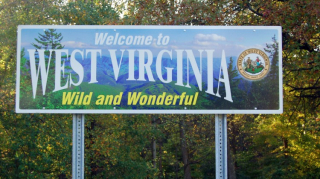
A bill that would permit the use of medical marijuana in West Virginia was approved by the House of Delegates on Tuesday.
The bill (SB 386), which would have created a West Virginia Cannabis Commission charged with overseeing medical marijuana regulation in the state, passed the Senate last week.On Monday, the House of Delegates amended the bill so that instead of a commission, it would create an advisory board within the state Department of Health and Human Resources’ Bureau for Public Health. They also made several other changes.
In a 51-48 vote, delegates approved an amendment by Delegate John Shott, R-Mercer and House Judiciary chairman, that would prohibit smoking, ban people from growing their own plants, and charge $100,000 annual fees for growers and processors. That fee was cut in half during a late-night floor session.
Senate President Mitch Carmichael said this afternoon that the Senate plans to concur with the House’s changes. Jacque Bland, spokeswoman for the Senate, said that likely won’t occur until Wednesday. “That’s our expectation, unless we find something that is just totally out of bounds in this bill,” Carmichael said. “We trust the House of Delegates and Chairman Shott’s work on this piece of legislation.”
If it occurs, the governor would still need to sign the bill for it to become law, and no patient identification cards would be issued until July of 2019….
The bill defines serious health conditions as cancer, HIV or AIDS, amyotrophic lateral sclerosis, Parkinson’s disease, multiple sclerosis, damage to the nervous tissue of the spinal cord with objective neurological indication of intractable spasticity, epilepsy, neuropathies, Huntington’s disease, Crohn’s disease, post-traumatic stress disorder, intractable seizures, sickle cell anemia, severe chronic or intractable pain of neuropathic origin or intractable pain in which conventional therapeutic intervention and opiate therapy is contraindicated or has proven ineffective, or having a medical prognosis of one year or less.
The bureau would regulate medical cannabis in the state, review physician applications, issue permits to growers, dispensaries and processors, maintain an electronic database to include “activities and information relating to medical cannabis organizations certifications and identification cards issued, practitioner registration and electronic tracking of all medical cannabis,” and maintain a directory of patients and caregivers to whom it has issued ID cards.