“Going to pot? Canada leads way in legalizing marijuana”
He said in a policy speech on [last week] that his Liberal government would introduce legislation as early as 2016 to legalize marijuana, making Canada the first in the G7 bloc of industrialized nations to do so, although precise details remain sketchy.
Two in three Canadians support decriminalizing possession and use of the mind-altering weed, according to a recent Ipsos poll. Support is widespread and at its highest level in three decades, it said, even though cannabis use has fallen off.
Details of the Liberal plan haven’t yet been released. However, it is expected to go much further by not only legalizing marijuana but also creating a regulated market for it, as Uruguay and a few US states have done. An estimated one million out of Canada’s 35 million people regularly smoke marijuana, according to the latest survey taken in 2014.
Trudeau admitted in 2013 to having smoked pot five or six times in his life, including at a dinner party with friends since being elected to parliament. He has also said that his late brother Michel was facing marijuana possession charges for a “tiny amount” of pot before his death in an avalanche in 1998, and that this influenced his decision to propose legalizing cannabis. “I’m not someone who is particularly interested in altered states, but I certainly won’t judge someone else for it,” Trudeau said. “I think that the prohibition that is currently on marijuana is unjustified.”
In 2014, there were just under 104,000 police-reported drug incidents in Canada. Of these, 66 percent were related to cannabis, primarily for possession, according to the official Statistics Canada. Police chiefs have urged legislative change allowing them to hand out fines for small amounts of pot possession instead of laying criminal charges to reduce policing and court costs, and to do away with such convictions affecting Canadians’ travel, employment and citizenship….
The use of marijuana for medicinal purposes was effectively legalized in Canada in 1999, but subsequent efforts to soften Canada’s pot laws went up in smoke with the election of Stephen Harper in 2006. Harper took a hard line against what he called a Beatles-era drug culture, saying cannabis was more dangerous for health than tobacco.
His former health minister Rona Ambrose, who succeeded Harper as Tory leader, warned that judicial rulings had chipped away at the 1923 cannabis prohibition before the drug could be shown in clinical trials to be safe to use. In June, she said she was “outraged” that the Supreme Court had expanded the definition of medical marijuana to allow users to bake it into cookies or brew pot leaves for tea instead of only smoking it.
The morning after the Liberals swept to power in October, pot stocks doubled in price as investors bet on firms already producing marijuana for medical use being able to quickly scale up to serve recreational pot users too. Only six firms were initially licensed by Health Canada to grow and sell medical marijuana in 2014. The number of licensees has since shot up to 26.
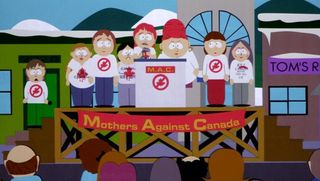
For a variety of reasons, I think the commitment of Canada’s new ruling party to create a legalized marketplace for marijuana up north could be extremely consequential for the on-going debate over marijuana reform throughout the United States. In particular, if Canada does get a functional legalizaed marijuana market up and running in 2016, I think it will prove especially difficult for northern states throughout the US to resist reform efforts. Thus, to parrot a famous South Park riff, if marijuana reform gets a significant boost from the north, supporters of preserving pot prohibition my want to “Blame Canada.