“As Colorado Loosened Its Marijuana Laws, Underage Consumption And Traffic Fatalities Fell”
Two consequences that pot prohibitionists attribute to marijuana legalization—more underage consumption and more traffic fatalities—so far do not seem to be materializing in Colorado, which has allowed medical use since 2001 and recreational use since the end of 2012.
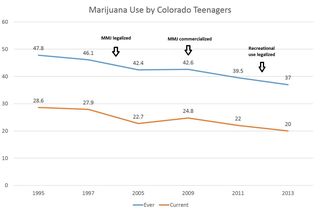
Survey data released last week by the Colorado Department of Public Health and Environment (CDPHE) indicate that marijuana use among high school students continues to decline, despite warnings that legalization would make pot more appealing to teenagers. In the 2013 Healthy Kids Colorado survey, 37 percent of high school students reported that they had ever tried marijuana, down from 39 percent in 2011. The percentage who reported using marijuana in the previous month (a.k.a. “current” use) also fell, from 22 percent in 2011 to 20 percent in 2013. The CDPHE says those drops are not statistically significant. But they are part of a general downward trend in Colorado that has persisted despite the legalization of medical marijuana in 2001, the commercialization of medical marijuana in 2009 (when the industry took off after its legal status became more secure), and the legalization of recreational use (along with home cultivation and sharing among adults) at the end of 2012…. Traffic fatalities also have generally declined since Colorado began loosening its marijuana laws. Fatalities rose in 2001, the year that Colorado’s medical marijuana law took effect, but by 2003 had fallen below the 2000 level. Since peaking in 2002, fatalities have fallen by more than a third. Legal sales of recreational marijuana began in January, and so far this year traffic fatalities are down. According to to the Colorado Department of Transportation, there were 258 fatalities from January through July, compared to 263 during the same period last year. In short, Colorado’s experience does not provide much evidence that less repressive marijuana laws make the roads more dangerous (and they might even make the roads safer by encouraging the substitution of cannabis for alcohol).